
Learning new skills as an adult can feel like you’re starting from scratch—especially when everyone around you seems to already know what they’re doing. But here’s the thing: skill development isn’t some magical talent you either have or don’t. It’s a learnable process, and understanding how to learn effectively can honestly change everything about how quickly you progress.
Whether you’re picking up a new technical skill for work, trying to level up your leadership abilities, or just wanting to get better at something you care about, the fundamentals are pretty much the same. And the good news? There’s actual science behind what works and what doesn’t. You don’t have to waste time on methods that feel productive but actually aren’t.
Let’s talk about what actually moves the needle when you’re building new capabilities.
Understanding How Adults Learn Differently
Adult learning isn’t just “schooling for grown-ups.” Your brain actually works differently now than it did when you were younger. Research from the American Psychological Association shows that adults learn best when the material directly connects to their lives and goals. You need to see the “why”—not just the “how.”
This is huge because it means you can’t just passively consume information and expect it to stick. You need to actively connect new knowledge to what you already know. Your brain is literally wired to ask: “How does this help me? Why should I care?” And if you can’t answer those questions, your brain won’t prioritize storing that information.
Adult learners also tend to be more self-directed. You’re not waiting for a teacher to tell you what to learn next; you’re actively seeking out information because you want something specific. That’s actually an advantage. It means you can customize your learning path in ways that work for your life, your schedule, and your goals.
Another thing that changes as you get older: you’ve got more life experience to draw from. This isn’t a limitation—it’s a superpower. Every skill you’ve already learned, every failure you’ve bounced back from, every project you’ve completed—all of that becomes a foundation for new learning. When you’re learning something totally new, you can connect it to patterns you already recognize.
The challenge is that adults often underestimate how much time and repetition is actually needed. We want to learn fast because we’re busy. But neuroscience research on skill consolidation shows that your brain needs time to integrate new information. Trying to rush it usually backfires.
The Role of Deliberate Practice in Skill Mastery
Here’s where a lot of people get stuck: they confuse “practice” with “deliberate practice.” They’re not the same thing at all.
Regular practice is just doing something over and over. You might play guitar for an hour every day but never improve because you’re just repeating the same songs the same way. Deliberate practice, though? That’s different. It’s focused work on specific weak points, with feedback, and it’s usually uncomfortable because you’re pushing at the edges of what you can do right now.
Think about it this way: if you can already do something pretty well, doing it again doesn’t make you much better. You need to find the part that’s hard, focus on that, get feedback on how you’re doing, and then adjust. Then repeat. That’s what actually creates change in your brain.
When you’re working on skill development strategies, you want to structure your practice sessions around this principle. Instead of spending two hours doing something you’re already decent at, spend thirty minutes specifically targeting the thing that trips you up. That thirty minutes will probably teach you more than the two hours would.
Feedback is crucial here, and it needs to be specific. “You did great!” doesn’t help. “Your timing was off in measures 3 and 5, and you’re not using enough finger pressure on the high notes” gives you something to actually work with. If you’re learning solo, you need to build in feedback mechanisms. Record yourself. Compare your work to examples from people who are better. Ask someone with expertise to watch and tell you what’s actually happening versus what you think is happening.
The other thing about deliberate practice: it’s exhausting. Not in a bad way, but in a “your brain is working hard” way. This is actually how you know it’s working. If practice feels easy and comfortable, you’re probably not pushing yourself enough. The discomfort is the signal that change is happening.
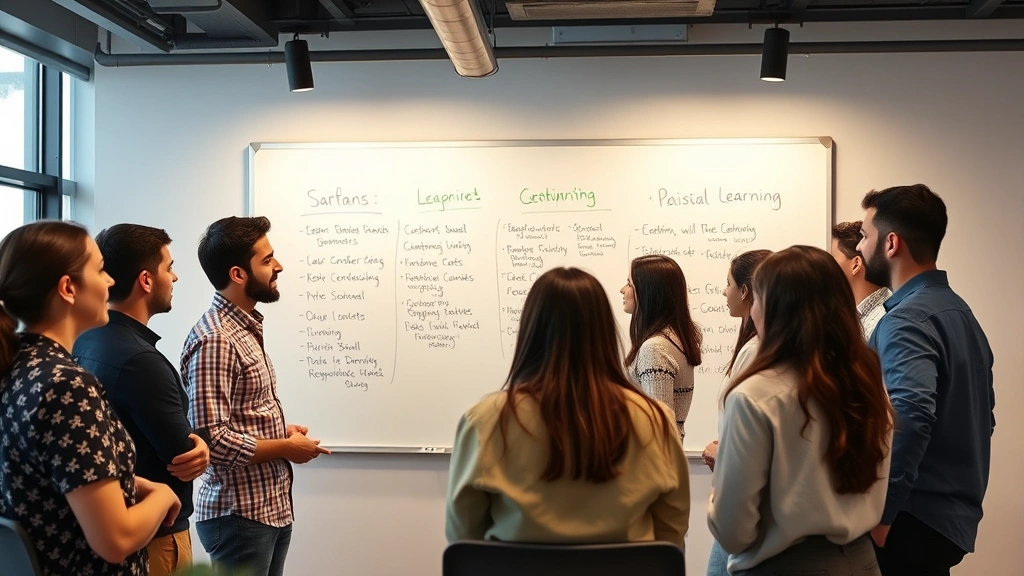
Creating Your Personal Learning System
You don’t need a fancy app or an expensive course (though some of those things can help). What you need is a system that works for your life.
Start by being clear about what you’re actually trying to learn. Not “I want to be better at public speaking”—that’s too vague. More like “I want to be able to present quarterly reports to our executive team without feeling panicked, and I want to make eye contact with the audience.” Specific is better because it gives you something to measure progress against.
Then break that down into smaller chunks. For public speaking, that might be: managing nervousness before going on stage, maintaining eye contact, pacing your words, handling questions, projecting confidence in body language. Now you’ve got five things to practice instead of one overwhelming thing.
Next, decide how you’re going to learn. Are you going to take a course? Read books? Find a mentor? Do YouTube videos? The answer is probably “some combination.” Different methods work for different things. If you’re learning something technical, you probably need hands-on practice. If you’re learning conceptual stuff, reading and discussion might be better. Education researchers have found that mixing methods usually works better than sticking with just one.
Build in a schedule. Not a vague “I’ll practice sometime this week” but actual time blocks. “Tuesday and Thursday from 7-7:30 PM, I’m working on X.” This removes the decision-making friction. When the time comes, you just do it.
Track your progress in a way that’s meaningful to you. This could be as simple as a checklist, or it could be recording yourself and comparing week to week. The point is to have evidence that you’re actually getting better. Our brains are terrible at remembering how we were three months ago, so external tracking helps you see progress that you might otherwise miss.
Overcoming Common Learning Plateaus
You’re probably going to hit a point where it feels like you’re not getting better anymore. This is so normal it’s almost a guarantee. It’s called a learning plateau, and it happens to everyone.
Here’s what’s usually happening: you’ve gotten to a level where the basic stuff is automatic, but you haven’t quite integrated the intermediate stuff yet. Your brain is reorganizing. This is actually when real growth is happening, even though it doesn’t feel like it. Psychological research on skill acquisition shows that these plateaus are a normal part of learning, not a sign that you’ve hit your limit.
The key is not to bail when it feels boring or stagnant. That’s exactly when a lot of people quit, thinking they’ve maxed out. But you haven’t. You’re in the part where the learning is less obvious but still happening.
What helps: change something about your practice. If you’ve been practicing alone, find a group or a partner. If you’ve been following one method, try a different approach. If you’ve been working on the same aspect, shift focus to something related but different. This breaks the mental monotony and often reveals new things you didn’t understand about the skill.
Also, remember that metacognition—thinking about your thinking—is itself a learnable skill. The more aware you become of how you learn best, what works for you, and where you tend to get stuck, the better you can design your own learning going forward. That’s a skill that pays dividends across everything.
Building Accountability and Momentum
You’re way more likely to stick with something if someone else knows you’re doing it. This isn’t weakness; it’s just how human brains work. We’re social creatures, and we respond to external commitment.
This could mean finding a practice buddy. Someone who’s also learning the same thing (or something similar) and you check in with each other weekly. It could mean telling your team at work that you’re working on something and asking them to notice when you’re using that new skill. It could mean joining an online community of people learning the same thing.
The accountability doesn’t have to be intense. Sometimes just saying out loud “I’m going to work on this” to someone is enough to shift your behavior. But if you’re someone who needs more external structure, don’t be shy about creating it. Pay for a coach. Sign up for a class with set meeting times. Join a group that meets regularly. These investments often pay for themselves in terms of follow-through alone.
On the momentum side: celebrate small wins. When you nail something you’ve been working on, take a second to acknowledge it. This isn’t about being cheesy; it’s about your brain registering progress. Each small success builds momentum for the next one. You’re more likely to keep going when you can see that you’re actually moving forward.
Also, make the first step as easy as possible. If you need to practice something, set up your environment ahead of time so there’s no friction. Have your materials ready. Eliminate distractions. The easier you make it to start, the more likely you are to actually do it.
One more thing about momentum: consistency beats intensity. Practicing for thirty minutes three times a week is almost always better than practicing for five hours once a week. Your brain consolidates learning over time, so regular exposure builds better neural pathways than sporadic marathon sessions.

FAQ
How long does it actually take to learn a new skill?
The honest answer is: it depends. Simple skills might take weeks. Complex ones might take years. But research suggests that focused, deliberate practice can accelerate things significantly. Instead of asking “how long,” it’s better to ask “how much focused practice do I need?” and work backward from there. Most people underestimate how much time is required because they’re not practicing deliberately.
Is it too late to learn something new as an adult?
Absolutely not. Your brain’s neuroplasticity—its ability to form new neural connections—doesn’t disappear after age 25 or 30 or 50. It does change somewhat, and it might take a bit longer, but you can absolutely learn new things. The advantage is that you bring more context and motivation to learning, which often makes you a better learner than you were as a kid.
What if I don’t have a lot of time to practice?
Then you focus on deliberate, focused practice instead of casual practice. Even fifteen minutes of targeted work on your weak points is better than an hour of unfocused repetition. Quality matters way more than quantity when you’re short on time. Also, think about how you can integrate learning into things you’re already doing. Listening to podcasts on a topic while commuting, for example, or practicing communication skills in actual conversations rather than in a formal class.
How do I know if I’m actually getting better?
Track something specific. Record yourself. Compare your work to examples. Ask someone with expertise. Measure against a clear standard. Don’t rely on how it feels because your perception of your own skill is often wildly inaccurate. We’re usually our own worst critics when we’re actually making progress, and sometimes overconfident when we’re not. External, objective feedback is your friend here.
What if I feel like I’m not naturally talented at this?
Good news: “natural talent” is mostly a myth. What looks like talent is usually just someone who started earlier and practiced more. There’s definitely individual variation in how quickly people pick things up, but that variation is way smaller than most people think. What matters way more is whether you’re willing to do the work and whether you know how to practice effectively. Both of those are totally within your control.