Master Deliberate Practice: The Science-Backed Framework for Rapid Skill Development
You’ve probably heard the phrase “10,000 hours to mastery” thrown around so much it’s lost all meaning. Here’s the thing though: it’s not really about the hours. It’s about what you’re doing during those hours. Some people can practice something for years and plateau hard, while others seem to level up their skills at lightning speed. The difference? They’re using deliberate practice—and it’s a learnable approach that actually works.
If you’re serious about getting better at something—whether that’s coding, writing, public speaking, or pretty much any skill you care about—you need to understand how deliberate practice actually functions. It’s not glamorous, and it’s definitely not passive, but it’s the closest thing we have to a cheat code for real skill development.
What Is Deliberate Practice, Really?
Deliberate practice isn’t just “trying hard” or “putting in the work.” It’s a specific, structured approach to improvement that was rigorously studied by psychologist K. Anders Ericsson, whose research fundamentally changed how we understand skill acquisition. Unlike casual practice—where you just repeat something over and over—deliberate practice is intentional, focused, and constantly pushing you to the edge of your current abilities.
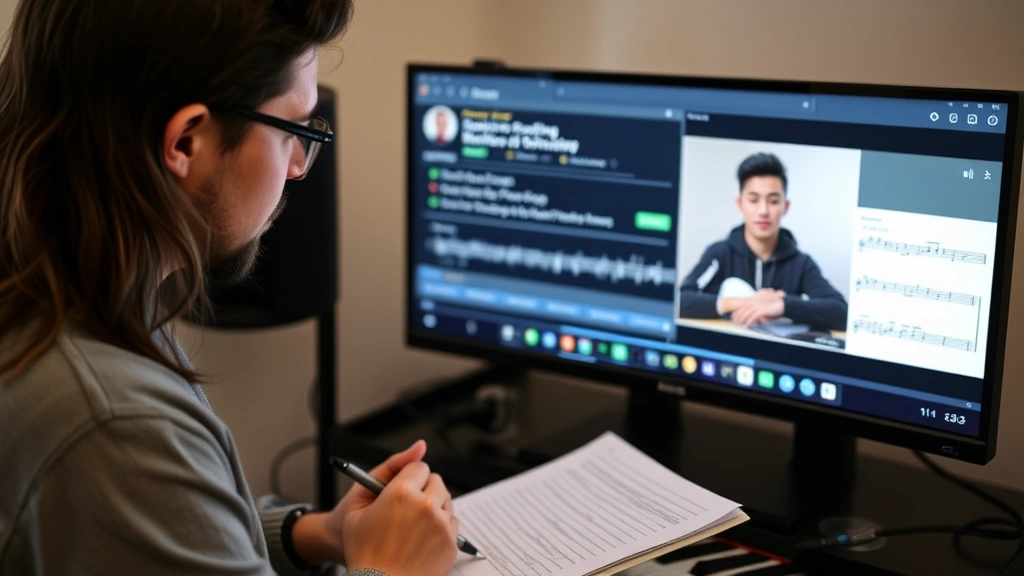
Think about the difference between someone who’s been playing guitar for five years versus someone who’s been playing for one year but with intense focus. The casual player might sound decent at their comfort level, but they’ve probably plateaued. The deliberate practitioner? They’re systematically breaking down difficult passages, getting feedback, adjusting their approach, and slowly expanding what’s possible for them.
When you engage in deliberate practice, you’re not just reinforcing what you already know. You’re actively confronting what you can’t do yet, figuring out why you can’t do it, and then systematically working to bridge that gap. It’s uncomfortable. It’s supposed to be. That discomfort is actually the signal that you’re triggering the neural changes that lead to real improvement.
Why Your Brain Actually Gets Better With This Approach
Your brain is genuinely plastic—it physically changes in response to how you use it. When you engage in deliberate practice, you’re triggering neuroplasticity, the brain’s ability to form new neural connections and reorganize existing ones. This isn’t metaphorical. Brain imaging studies show that musicians, athletes, and other highly skilled people literally have different brain structures in areas related to their expertise.
Here’s what happens at a neurological level: when you attempt something just beyond your current capability and receive feedback on your performance, your brain releases neurotransmitters that help consolidate new learning. Repeated, focused attention on specific skill components strengthens the neural pathways involved in executing those components. Over time, what required intense conscious effort becomes more automatic—but only if you’re practicing the right way.
The research from the American Psychological Association on learning science consistently shows that this kind of targeted, effortful practice produces stronger long-term retention and transfer than passive learning or casual repetition. Your brain needs challenge, feedback, and repetition in that specific combination to actually change.
This is also why binge-practicing something for eight hours straight is less effective than spreading practice across multiple sessions. Your brain needs time to consolidate what it learned. The magic happens partly during practice, but also during rest periods when your brain processes and integrates new information.
The Five Core Components You Can’t Skip
Not all focused practice is created equal. Real deliberate practice has five specific ingredients. Skip one, and you’re just grinding—which feels productive but doesn’t actually move the needle as fast as it could.
1. Clear, Specific Goals
“Get better at writing” is not a goal. “Write a 500-word essay with no grammatical errors and clear paragraph transitions” is a goal. Your brain needs specificity to know what to focus on. When your goal is vague, your practice becomes vague, and you end up just repeating what you already know how to do.
The best practice goals are usually narrow. Instead of “improve my public speaking,” try “deliver the opening 60 seconds of my presentation without filler words like ‘um’ and ‘uh’.” That specificity lets you actually notice when you’re doing it right versus wrong.
2. Full Attention and Focus
You cannot deliberate practice while scrolling your phone. You cannot do it while half-listening to a podcast. Your brain has limited attentional resources, and real skill development requires you to direct most of them toward the task at hand. Research in cognitive psychology shows that divided attention significantly reduces learning outcomes and skill consolidation.
This is why environment matters. If you’re trying to practice something that requires focus, you need to eliminate distractions. Put your phone in another room. Close your browser tabs. Tell people you’re unavailable. It sounds extreme, but when you’re trying to rewire your brain, half-measures produce half-results.
3. Immediate, Specific Feedback
This is the component that separates deliberate practice from everything else. You need to know, quickly and clearly, whether you did the thing right or wrong—and specifically why. “You did good” doesn’t work. “Your timing was off on that transition, it needs to be 0.5 seconds faster” does work.
Feedback can come from a coach, a mentor, a teacher, or sometimes from tools and metrics you set up yourself. If you’re learning to code, your feedback is the compiler telling you there’s an error. If you’re learning to write, your feedback might come from a writing partner or from comparing your work to published examples you admire. The key is that it’s specific and it’s quick—ideally in the same session where you practiced.
4. Practice at the Edge of Your Ability
This is sometimes called the “zone of proximal development,” and it’s crucial. If the task is too easy, you’re not triggering the neural changes you need. If it’s too hard, you become frustrated and discouraged. You want to be working on something that’s challenging but not impossible—something you can sometimes succeed at, sometimes fail at, and always learn from.
This means you need to constantly adjust your practice as you improve. As soon as something becomes comfortable, you make it harder. This progressive overload is what keeps your brain engaged and growing.
5. Repetition With Variation
You need to repeat the skill enough times for it to stick, but you also need to practice it in different contexts and variations. A musician practices the same passage 20 times, but not identically each time—they vary the tempo, the dynamics, the emotional intention. A writer practices the same type of sentence structure in different genres and contexts.
This variation is what helps your brain extract the underlying pattern and apply it flexibly in new situations. Pure repetition of the exact same thing can lead to automaticity, but it doesn’t necessarily lead to the kind of adaptable skill you actually want.
How to Build Your Own Deliberate Practice System
So how do you actually set this up? Here’s a practical framework:
- Identify the specific subskills. Break down the skill you want to develop into smaller, more manageable components. If you want to improve your ability to give presentations, subskills might include: voice modulation, eye contact, pacing, handling questions, managing nervousness. Pick one to focus on first.
- Set a measurable target. What does “better” actually look like? “Maintain eye contact for 3+ seconds with different audience members” is measurable. “Be more confident” is not.
- Design practice activities. Create or find activities specifically designed to target that subskill. If you’re working on eye contact, maybe you practice a one-minute introduction while deliberately making eye contact with different people, and you record yourself to review.
- Build in feedback loops. How will you know if you’re improving? Can you record yourself? Get someone to observe and give you feedback? Use a checklist? The feedback mechanism matters.
- Schedule it consistently. Deliberate practice is taxing—it requires full attention and energy. Most people can do it for 45-90 minutes before their focus drops off. Schedule shorter, more frequent sessions rather than marathon sessions.
- Review and adjust. Every week or two, look at your progress. Are you getting better? If not, what’s the bottleneck? Do you need different feedback? A different practice activity? More context about why you’re struggling?
The beauty of this system is that it’s adaptable to literally any skill. You’re learning language, coding, athletic skills, artistic abilities—the structure remains the same.
Mistakes That Tank Your Progress
Even when people understand the theory of deliberate practice, they still make mistakes that slow their improvement. Here are the big ones:
Mistaking volume for intensity. Practicing for 10 hours unfocused is worse than practicing for 1 hour with full attention. Your brain doesn’t improve from just putting in time; it improves from engaging with material at the edge of your ability with clear feedback.
Practicing without feedback. This is huge. You can spend months practicing something “wrong” if you’re not getting feedback. You might feel like you’re improving because it’s becoming more automatic, but you’re actually automating incorrect patterns. Always have some mechanism for knowing whether you’re doing it right.
Staying in your comfort zone. Once something becomes easy, most people keep practicing it because it feels good and productive. But that’s not where improvement happens. Improvement happens when you’re slightly uncomfortable, slightly uncertain, slightly challenged. As soon as something becomes routine, make it harder.
Ignoring the importance of rest and sleep. Your brain consolidates learning during rest, especially during sleep. If you’re practicing intensely but not sleeping enough or taking breaks, you’re cutting your own progress in half. This isn’t laziness; this is neuroscience. Sleep research consistently demonstrates that adequate sleep is essential for skill consolidation and long-term retention.
Not connecting practice to real-world application. You need to eventually practice your skill in realistic contexts. If you only practice public speaking in your bedroom, you won’t be prepared for the actual presentation. Some of your practice should be in controlled conditions (where you can get detailed feedback), but some should be in the messy real world where you have to adapt and improvise.
Tracking Real Improvement (Not Just Hours)
One of the biggest mistakes in skill development is measuring the wrong things. Hours spent practicing feels productive, but it’s not the same as actual improvement. Here’s what to actually track:
Specific performance metrics. Whatever your goal is, find a way to measure it objectively. If you’re learning to code, it’s “programs that run without errors.” If you’re learning to write, it’s “articles that receive positive feedback from readers.” If you’re learning a language, it’s “conversations you can have without reverting to English.” These metrics should be specific and measurable.
Difficulty progression. Are you able to tackle harder problems or more complex situations? This is a sign of real improvement. If the challenges you’re working on haven’t gotten harder in three months, you might not be progressing as much as you think.
Feedback quality and consistency. Are you getting clearer feedback? Are you understanding it faster? The speed at which you can process and act on feedback is itself an indicator of skill development.
Automaticity in complex situations. The ultimate test is whether you can execute your skill in complex, real-world situations without having to think through every step. A skilled writer doesn’t consciously think about grammar while writing; a skilled athlete doesn’t consciously think about their stance while playing. When your skill becomes automatic in real conditions, you’ve genuinely improved.
Create a simple tracker. Maybe it’s a spreadsheet. Maybe it’s a notebook. The goal is to have concrete evidence of progress so you can see patterns and stay motivated when things feel stuck.

FAQ
How long does deliberate practice take to show real results?
It depends on the skill and your starting point, but most people notice meaningful improvement within 3-4 weeks of consistent deliberate practice. That said, the timeline varies wildly. Some skills have faster feedback loops than others. Learning to code might take months to see substantial improvement, while learning to give better presentations might show results in weeks. The consistency matters more than the duration.
Can I deliberate practice multiple skills at once?
Technically yes, but it’s not ideal. Your brain’s capacity for deliberate practice—that focused, effortful work—is limited. If you’re doing serious deliberate practice on two skills simultaneously, you’re probably diluting your effort on both. It’s better to focus on one skill intensely for a period, then shift to another. That said, practicing related skills (like different writing styles) is different from practicing completely unrelated skills (like coding and dancing).
What if I don’t have access to a coach or mentor for feedback?
You can create feedback mechanisms yourself. Record yourself and compare it to examples of excellent performance. Create a checklist based on the key components of the skill. Find a peer who’s also learning and give each other feedback. Use online communities where experienced practitioners will critique your work. Technology tools can also provide feedback—writing software that checks grammar, music apps that analyze your playing, coding platforms that run your code. It’s not as good as a skilled coach, but it’s better than nothing, and it’s often enough to make real progress.
Is deliberate practice boring?
Honestly? Sometimes, yeah. It’s not always fun because it requires sustained focus and it means constantly confronting your limitations. But here’s the thing: the boredom is usually temporary. Once you start seeing progress, once you start being able to do things you couldn’t do before, it becomes genuinely engaging. And there are ways to make it less tedious—varying your practice activities, practicing with others, connecting your practice to larger goals that matter to you. The key is accepting that the “boring” part is where the magic happens.
What’s the relationship between deliberate practice and natural talent?
Natural talent is real—some people do have genetic advantages in certain areas. But research shows that deliberate practice is far more important than raw talent for reaching high levels of skill. People with moderate talent but excellent deliberate practice practices consistently outperform naturally talented people who practice casually. Talent might give you a head start, but practice gives you the finish line. Educational psychology research repeatedly demonstrates that effort and effective practice strategies matter more than innate ability for skill development.
Can I use deliberate practice to improve soft skills like communication or leadership?
Absolutely. Soft skills often feel fuzzy and hard to practice, but you can break them down into specific components and practice them deliberately. Leadership, for example, breaks down into things like: giving clear feedback, asking good questions, making decisions under uncertainty, building trust. You can practice each component deliberately. Communication breaks down into: clarity, listening, adapting to your audience, managing your tone. The principles are exactly the same as for technical skills.