
How to Develop Technical Skills That Actually Stick With You
Learning a new technical skill feels exciting at first. You find a tutorial, maybe grab a course, and you’re pumped. Then two weeks in, life gets busy, the concepts start feeling abstract, and suddenly you’re wondering if you actually retained anything. Sound familiar?
Here’s the thing: developing technical skills isn’t about finding the perfect course or grinding through 100-hour bootcamps. It’s about understanding how your brain actually learns technical concepts and building a system that works with that reality, not against it.
I’ve watched people spend thousands on courses and forget everything. I’ve also watched people with half the resources build genuinely impressive technical abilities. The difference? They approached skill development strategically. This guide walks you through exactly how to do that.
Understanding How Technical Skills Actually Develop
Before we get tactical, let’s talk about what’s actually happening in your brain when you learn something technical. There’s real science here, and it matters for how you approach your learning.
When you first encounter a new technical concept—say, async/await in JavaScript or database indexing—your brain is essentially pattern-matching against everything it already knows. If you’re learning your first programming language, you have fewer patterns to work with. If you’re learning your tenth, your brain has more scaffolding to attach new concepts to. That’s why it genuinely gets easier.
But here’s where most people go wrong: they treat the initial exposure—watching a tutorial, reading documentation—as if it’s the same as actually learning. It’s not. That initial exposure is just the beginning. Your brain needs multiple interactions with the concept in different contexts before it truly sticks.
Research on how learning actually works shows that spaced repetition, retrieval practice, and interleaving (mixing up different types of problems) are some of the most effective learning strategies. Not the most fun. Not the most efficient-feeling in the moment. But the most effective long-term.
This is crucial because it changes your entire approach. You’re not trying to “finish” a course. You’re building neural pathways through strategic repetition and application.
Why Deliberate Practice Changes Everything
Let’s talk about deliberate practice because it’s probably not what you think it is.
Deliberate practice doesn’t mean “practicing a lot.” It means practicing with specific intention, focused feedback, and constant challenge. If you’re practicing something you’re already comfortable with, you’re not doing deliberate practice—you’re just reinforcing existing knowledge.
Here’s what deliberate practice actually looks like for technical skills:
- You work on problems that are slightly beyond your current ability
- You get immediate, specific feedback (ideally from someone experienced or a system that gives detailed error messages)
- You adjust your approach based on that feedback
- You repeat this cycle, gradually increasing difficulty
This is why building real projects matters so much more than completing tutorials. A tutorial walks you through the “happy path.” Real projects throw edge cases at you, force you to debug, and require you to actually understand concepts rather than just follow steps.
Think of it this way: watching someone play a video game teaches you almost nothing about playing. Actually playing—failing, trying again, learning from mistakes—teaches you everything. Same principle applies to technical skills.
If you’re working on skill development strategies specifically, you’ll find that the most successful people combine structured learning with real-world application almost immediately. They don’t wait until they feel “ready.”
The Spacing Effect and Why Cramming Fails
Remember cramming for exams? It kind of worked in the moment, right? You’d retain enough to pass. Then a month later, you couldn’t remember any of it.
That’s the spacing effect in action. Your brain consolidates memories better when you encounter information across time, with gaps between encounters. The gaps matter. During those gaps, your brain actually strengthens the neural connections related to that information.
This has huge implications for how you structure your learning:
- Don’t do 10-hour learning marathons. Do consistent, shorter sessions spread across weeks and months.
- Come back to concepts you learned weeks ago. Don’t just move forward.
- Interleave different topics rather than blocking them (learn a bit of concept A, then B, then back to A).
A study from The Learning Scientists found that students who distributed their practice over time and interleaved different problem types significantly outperformed those who massed their practice. And they retained the knowledge longer.
The practical takeaway? If you’re learning a technical skill, schedule regular review sessions. If you’re learning a new programming language, don’t spend three weeks on variables, then three weeks on loops. Mix it up. Build small projects that use concepts you learned weeks ago alongside new material.
Active Learning Beats Passive Consumption
Here’s something that might feel uncomfortable: most of what people call “learning” is actually passive consumption.
Watching a tutorial video? Passive. Reading documentation? Passive (unless you’re actively taking notes and testing things). Listening to a podcast about technical concepts? Passive.
These aren’t useless—they provide input. But input alone doesn’t create skill. You need output.
Active learning looks like:
- Writing code (even if it’s broken)
- Explaining concepts in your own words (to a friend, in writing, or in a notebook)
- Trying to solve problems before looking at solutions
- Teaching someone else what you just learned
- Asking yourself questions and trying to answer them
This is why rubber duck debugging works. Explaining your code to a rubber duck forces you to articulate your thinking, which reveals gaps in your understanding. Same principle applies to learning.
When you’re developing new skills, especially technical ones, your goal should be to spend maybe 20-30% of your time consuming information and 70% of your time trying to apply it, fail, debug, and succeed.
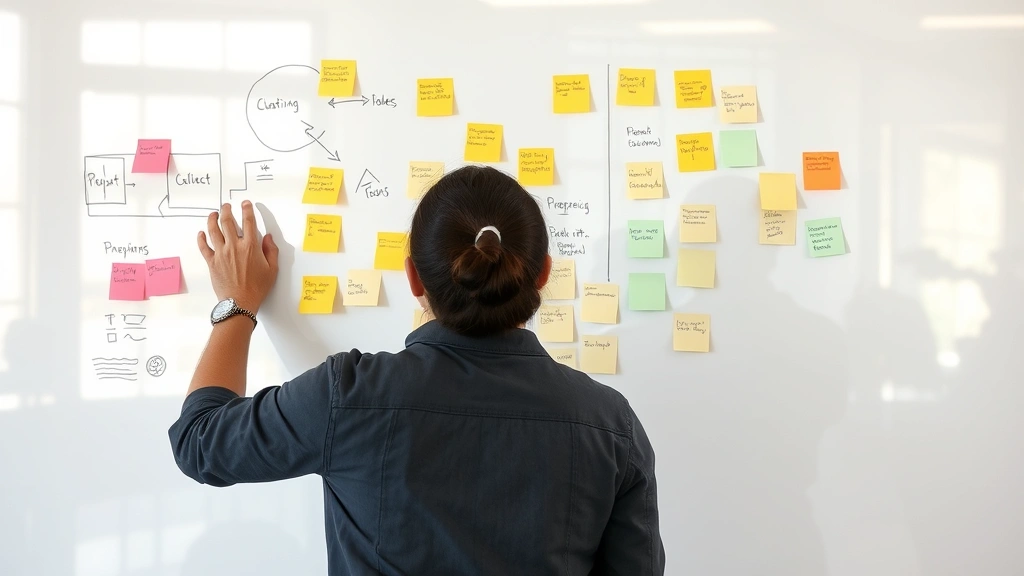
Building Systems That Stick
Okay, you understand the theory. Now let’s get practical.
Building a system for technical skill development means creating a structure that works with your brain’s learning patterns, not against them. Here’s what that looks like:
1. Start with a clear, specific goal. Not “learn Python.” That’s too vague. “Build a web scraper that extracts data from a real website” or “write a script that automates something in my current job.” Specific goals give your brain something to work toward and help you recognize when you’re making progress.
2. Choose a learning path with built-in spacing. If you’re using courses or structured materials, pick ones that have you returning to concepts multiple times. Some well-designed programs do this automatically. Others don’t. Check.
3. Build a project immediately. Don’t wait until you feel “ready.” You’ll never feel fully ready. Start something simple that uses the concepts you’re learning. It’ll feel clunky. That’s fine. That’s learning.
4. Create a feedback loop.** This could be code reviews with someone more experienced, automated testing, or even just comparing your approach to solutions online. The key is getting information about what’s working and what isn’t.
5. Schedule review sessions.** Every week, spend some time going back to concepts you learned weeks ago. Write them out. Try to solve problems using old and new knowledge mixed together.
People often ask about learning from failure as part of this process, and honestly, it’s essential. Your mistakes are data. They tell you exactly where your understanding is weak. That’s valuable information.
Breaking Through Skill Plateaus
Here’s something nobody talks about enough: you will hit plateaus. Periods where you’re practicing but not seeing obvious improvement. It’s not because you’re broken or lacking talent. It’s a normal part of skill development.
Plateaus usually happen because:
- You’ve automated the basics, so progress feels invisible
- You’re practicing things you’re already decent at instead of pushing into harder territory
- You need a different type of input or feedback to progress further
Breaking through requires intentional difficulty. If you’re comfortable, you’re not growing. This doesn’t mean frustration—there’s a sweet spot between “too easy” and “impossibly hard.” But you need to actively seek out challenges that stretch your current ability.
Overcoming learning obstacles often means recognizing that plateaus are temporary and shifting your approach slightly. Sometimes that means finding a mentor. Sometimes it means switching to a different learning resource. Sometimes it means taking on a project that’s genuinely too hard and struggling through it.
The research on this is pretty clear: growth happens at the edge of your current ability, not in your comfort zone. So when you hit a plateau, that’s actually a signal to push harder, not back off.

FAQ
How long does it actually take to develop a technical skill?
It depends on the skill, your background, and how much time you dedicate. But the honest answer? Longer than you think, shorter than you fear. Most technical skills take 100-300 hours of focused practice to reach basic competency. Deeper expertise takes years. The good news: you don’t need to be an expert to be valuable. You just need to be intentional about how you spend those hours.
Should I learn multiple technical skills at once or one at a time?
One at a time, especially if they’re in different domains. Your brain has limited working memory. That said, once you’re past the initial learning phase with one skill, starting another related skill can actually help both (interleaving effect). Learning Python and JavaScript simultaneously? Probably counterproductive. Learning Python and data visualization? Might reinforce both.
What if I don’t have time for 100+ hours?
Then you won’t reach competency in that skill within your timeframe. But you can still make progress. Consistent, focused practice beats sporadic marathon sessions. 30 minutes daily is better than 5 hours once a month. Set realistic expectations and adjust your goals accordingly. Maybe instead of “become a full-stack developer,” your goal is “understand enough JavaScript to modify existing code.” That’s valid and achievable.
Is it better to learn from courses, books, or building projects?
All three. Courses give you structure and guided input. Books provide depth and allow you to learn at your own pace. Building projects forces active learning and reveals gaps in your understanding. The best learning path uses all three. Maybe you do a course section, then read about that topic in a book, then try to build something using it.
How do I know if I’m actually learning or just going through the motions?
Can you explain the concept to someone else without looking at your notes? Can you solve a problem you haven’t seen before using the skill? Can you identify where you’d use this in a real situation? If you answer yes to these, you’re learning. If you’re just following tutorials step-by-step and couldn’t apply the concept independently, you’re probably going through the motions.
What about learning styles—visual, auditory, kinesthetic?
The “learning styles” theory isn’t actually supported by research. What works better: varying how you encounter information. Use videos, text, hands-on coding, discussions—not because you have a “visual learning style,” but because varying the input helps your brain consolidate the information better.