
How to Develop New Skills: A Practical Guide to Growth That Actually Sticks
Learning something new is weird. You’re not good at it yet, but you’re aware enough to know you’re not good at it—that gap between where you are and where you want to be can feel pretty uncomfortable. But here’s the thing: that discomfort? It’s actually a sign you’re doing it right.
Whether you’re picking up a technical skill for your career, learning a language, mastering a creative pursuit, or developing soft skills that’ll make you better at, well, everything—the process is more predictable than you’d think. It’s not about being naturally talented or having unlimited free time. It’s about understanding how your brain actually learns, then building a system that works with that, not against it.
This guide walks you through what the research actually says about skill development, plus practical strategies you can start using today. No fluff, no “just believe in yourself” nonsense. Just real approaches backed by learning science.
Understanding How Skills Actually Develop
Let’s start with what research tells us about how humans learn. The American Psychological Association has spent decades studying this, and one consistent finding keeps showing up: skills develop through repeated practice combined with feedback, not through passive exposure.
Your brain is basically a prediction machine. When you’re learning something new, you’re building neural pathways—physical connections between brain cells that let you do things more automatically over time. That’s why the first time you try something, it feels clunky and requires massive mental effort. Your brain’s still figuring out the pattern.
This matters because it means you can’t just read about something and expect to be good at it. You have to actually do it. Repeatedly. With some way to know if you’re doing it right. That’s not a limitation—it’s actually liberating, because it means the playing field is pretty level. Natural talent exists, sure, but deliberate practice beats raw talent almost every time.
One concept that’s really useful here is deliberate practice—a term popularized by psychologist K. Anders Ericsson. It’s practice that’s specifically designed to improve performance, with clear goals and immediate feedback. It’s exhausting (your brain gets genuinely tired), but it’s also the most efficient way to actually get better.
The key difference between deliberate practice and just “putting in time” is intentionality. Doing something the same way a thousand times won’t make you a thousand times better if you’re not actively trying to improve. You need to be pushing at the edges of what you can do, failing sometimes, getting feedback, and adjusting.
The Four Stages of Learning Any Skill
There’s a model that’s been around for a while that does a solid job of describing what skill development actually looks like. It has four stages, and understanding where you are in the process helps you know what to expect and what to do next.
Stage 1: Unconscious Incompetence is when you don’t know what you don’t know. You’re thinking about taking up guitar, but you haven’t really grasped how much there is to learn. This stage doesn’t last long once you actually start, but it’s real.
Stage 2: Conscious Incompetence is the awkward middle ground. You’re trying, you’re learning, but you’re very aware of how much you suck. This is where most people quit, honestly. It’s frustrating because you can see the gap between where you are and where you want to be. But this is also where real learning happens. Your brain is making connections, building that muscle memory or conceptual understanding. The discomfort is the point.
Stage 3: Conscious Competence is when you can do the thing, but it requires focus and attention. You’re thinking through each step. A beginner guitar player in this stage can play a song, but they’re concentrating hard, and if they get distracted, they mess up.
Stage 4: Unconscious Competence is the goal—you can do it automatically. You’re not thinking about where your fingers go or what the next step is. It just happens. That’s when a skill becomes truly useful because you can apply it in real situations without your conscious mind being tied up in the mechanics.
Most people expect to jump from stage 2 to stage 4 pretty quickly. That’s not how it works. Stage 3 is where you spend the actual time. And that’s okay. Knowing that helps you not freak out when you’re in month three and still thinking through every step.
Building Your Learning System
So you’ve decided to develop a skill. Good. Now don’t just wing it. A learning system doesn’t need to be complicated, but it does need to exist. Here’s what it should include:
Clear learning goals. “Get better at writing” is too vague. “Write 500 words three times a week for the next eight weeks and get feedback from two people each time” is something you can actually work with. Your brain needs specificity. When you have a clear target, you know what to practice and you know when you’ve hit it.
Regular practice schedule. This is non-negotiable. Consistency beats intensity almost every time. Practicing for 30 minutes four times a week will get you better results than a six-hour marathon session once a month. Your brain consolidates learning over time, especially during sleep, so spacing things out actually works better. Pick a schedule you can actually stick to, and protect that time like you’d protect a meeting with your boss.
Quality feedback loops. You need to know how you’re doing. This can come from a teacher, a mentor, a peer, or sometimes even from your own careful self-assessment—but you need some way to know if you’re improving or just repeating the same mistakes. That’s what separates deliberate practice from just going through the motions.
Consider investing in finding a mentor or coach if possible. They’re worth it specifically because they provide that external feedback. You get better faster with feedback from someone who knows what good looks like.
Resources and environment. Make it easy to practice. If you’re learning an instrument, keep it out where you’ll see it. If you’re learning a language, set your phone to that language. Remove friction from the process. You’re already using willpower to actually do the practice—don’t waste extra willpower on deciding where to practice or gathering your materials.
Progress tracking. Write down what you’re doing. Seriously. Not for some productivity cult reason, but because your brain is terrible at remembering how much progress you’ve made. When you feel stuck, looking back at where you started is incredibly motivating. Plus, tracking helps you notice patterns—maybe you always get stuck on a particular thing, or maybe you progress faster when you practice at certain times.
Practice Strategies That Work
Not all practice is created equal. Here are the strategies that research actually backs up.
Spaced repetition. Revisit what you learned, with increasing gaps between reviews. You learn something on Monday, review it Thursday, then next week, then two weeks later. This is how your brain actually moves information into long-term memory. It feels less efficient than cramming, but it’s way more effective. There’s solid research on this—neuroscience journals have documented the mechanism pretty thoroughly.
Interleaving. Mix up what you practice instead of doing one thing until you’re perfect at it, then moving to the next. If you’re learning a language, don’t spend a week on verb conjugation, then a week on vocabulary. Mix them in the same practice session. It feels harder and slower, but your brain actually builds stronger, more flexible understanding. You’re forced to figure out what technique applies to each situation, which is closer to real-world use anyway.
Elaboration. Don’t just memorize isolated facts. Connect new information to things you already know. Explain it in your own words. Ask yourself why something works, not just how. Teach it to someone else if you can. All of this forces your brain to build more connections, which makes the knowledge stickier and more useful.
Low-stakes testing. Quiz yourself. Not as punishment, but as practice. Trying to retrieve information from memory is way better for learning than reviewing notes. This is backed by decades of research at this point. Even if you get it wrong, that failure is valuable—your brain learns from it.
Many people overlook active learning techniques in favor of passive review. Don’t be that person. Make yourself actually retrieve and use the information you’re learning.
Variation in practice context. Practice in different environments, at different times, with different materials if possible. This helps your brain understand the underlying principle rather than just memorizing a specific scenario. It’s why practicing a speech in your room is less effective than practicing it in front of different groups—your brain learns the skill more robustly.
Staying Consistent When Progress Feels Slow
Here’s where most skill development efforts die: the middle part. You’re past the initial excitement, but you’re not yet at the level where you feel genuinely competent. Progress feels glacial. Your motivation is tanking.
First, normalize this. It’s called the learning plateau, and it happens to everyone. Your brain isn’t learning as visibly during this phase, but it’s still learning. Consolidation is happening at a level you can’t see yet. Your nervous system is getting more efficient. You’re building the foundation for the jump to the next level.
During this phase, your system matters more than your motivation. Motivation is a feeling, and feelings change. Systems are structures, and structures persist. This is why that practice schedule you set up earlier is so important. You don’t need to feel like practicing. You just follow the schedule.
But there are things that help with motivation too. Track visible progress. Even if the big skill doesn’t feel like it’s improving, track micro-progress. How many practice sessions have you completed? How much faster did you do it this week compared to last week? How many mistakes did you make (fewer mistakes is progress)? These small wins keep you going.
Connect to your why. Remember why you wanted this skill in the first place. Not in a vague way—specifically. Are you learning to code because you want to build something? Go spend time thinking about that project. Are you learning a language to travel or connect with family? Spend a few minutes imagining that. This isn’t magical thinking; it’s how your brain maintains motivation over time.
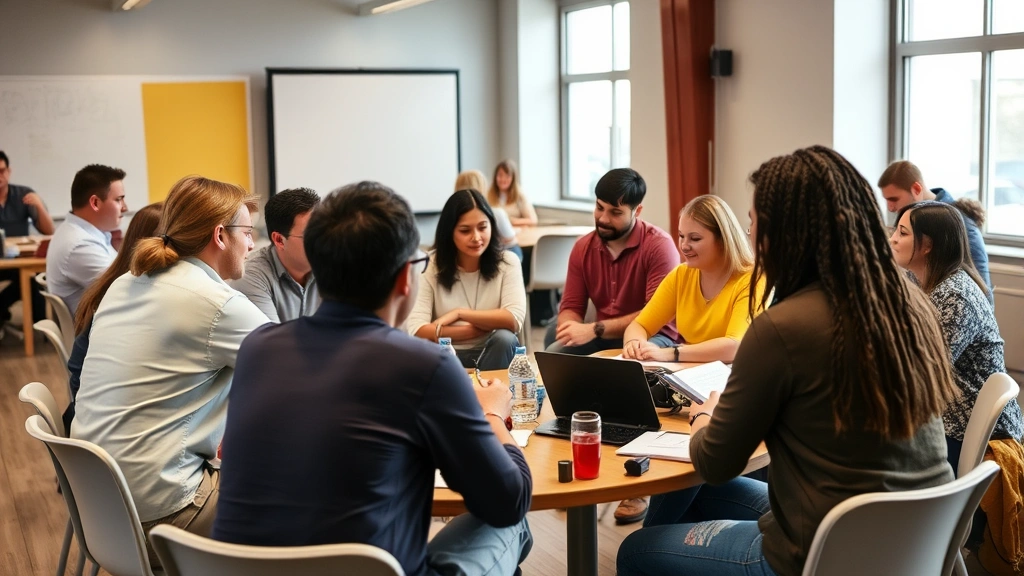
Find community. Learning alone is harder than learning with other people. Join a class, find an online community, get a practice partner. Other people who are learning too will remind you that this phase is normal and temporary. Plus, social connection is a legit learning tool—it helps information stick.
Explore how peer learning amplifies your progress when you’re hitting a plateau. Sometimes just knowing you’re not alone makes a huge difference.
Overcoming Common Obstacles
Let’s talk about the stuff that actually trips people up.
“I don’t have enough time.” You probably have more time than you think, but even if you don’t, start small. Fifteen minutes a day beats zero minutes. The consistency matters more than the duration. You’ll be shocked how much you can learn from 15 focused minutes four times a week.
“I’m too old to learn this.” Nope. Your brain can learn new things at any age. It might take slightly longer to form new neural pathways as you get older, but the difference is smaller than you’d think. Plus, older learners often have advantages—you have more context to connect new information to, you have better metacognition (knowing how you learn), and you have more patience. Use those advantages.
“I keep making the same mistakes.” This usually means your feedback loop is broken. You need clearer feedback or you need to be more intentional about what you’re trying to improve. Pick one specific mistake, focus on it exclusively for a week or two, then move to the next. Don’t try to fix everything at once.
“I’m not naturally talented at this.” Good. Natural talent is overrated. Psychologist Angela Duckworth’s research on grit shows that persistence and deliberate practice predict success way better than natural ability. You don’t need to be naturally gifted. You need to be willing to do the work.
“I’m comparing myself to people who are way ahead.” Stop that. Compare yourself to where you were last month. That’s the only comparison that matters. Everyone you see who’s really good at something put in years of work that you didn’t see. You’re not behind; you’re at the beginning of your own journey.
Understanding growth mindset versus fixed mindset thinking helps here. When you hit difficulty, that’s your brain growing. It’s not a sign you’re not cut out for it.
“I plateaued and I don’t know how to improve anymore.” Time to increase the difficulty or change your practice method. If something’s become automatic, you need to push yourself harder to keep learning. This is where working with a mentor or coach becomes really valuable—they can help you see what the next level looks like.
Consider exploring deliberate practice frameworks designed specifically for your skill. Different skills benefit from different approaches, and sometimes you just need someone to show you what “deliberate” actually looks like for your particular goal.

FAQ
How long does it actually take to learn a new skill?
It depends on the skill and what you mean by “learn.” You can get basic competence in most things in a few months of consistent practice. Real fluency—where you can apply the skill in varied situations without thinking about it—usually takes longer. The old rule of thumb is 10,000 hours for mastery, but that’s assuming deliberate practice. Casual practice takes way longer. For most practical skills, you’re looking at months to a couple years for genuine competence, not hours.
Should I learn multiple skills at once or focus on one?
Focus on one if you’re just starting out. Your brain has limited resources, and spreading yourself too thin means you don’t go deep enough with any of them to actually progress. Once you’re in the maintenance phase with your first skill (you don’t need to actively improve anymore, just keep it sharp), then add a second. But for active learning, one skill at a time gets you better results faster.
What if I fail at learning something? Should I try again?
Depends on why you failed. If you failed because you didn’t have a good system, a clear goal, or consistent practice—yeah, try again with a better approach. If you failed because you realized you don’t actually want this skill, that’s also valuable information. Don’t force it. But don’t confuse “it’s hard” with “I can’t do this.” Hard is normal. Impossible is rare.
Is it better to learn alone or with others?
Both have benefits. Learning with others helps with motivation and gives you feedback. Learning alone lets you go at your own pace without feeling rushed or self-conscious. Ideally, mix them—get feedback from others, but do your daily practice on your own schedule. Find a practice partner or group for accountability and community, but protect your solo practice time too.
How do I know if I’m actually improving?
Track it systematically. Can you do things now that you couldn’t do three months ago? Are you making fewer mistakes? Are you faster? Do tasks that used to require intense focus now feel more automatic? These are all signs of progress. If you’re not seeing any of these things, your practice might not be deliberate enough—you might need to adjust your approach or get feedback from someone who knows what they’re doing.