
Master the Art of Deliberate Practice: Your Blueprint for Rapid Skill Development
You know that feeling when you’re stuck at a plateau? You’ve been practicing for weeks, maybe months, but nothing seems to click. The frustrating truth is that most people confuse time spent with actual progress. Just showing up isn’t enough. What separates people who genuinely level up from those who tread water is something called deliberate practice—and it’s way more specific than you’d think.
Here’s the thing: deliberate practice isn’t just about grinding harder or longer. It’s about being intentional, focused, and brutally honest with yourself about where you suck. Sounds tough? It is. But it’s also the most reliable path to real mastery, whether you’re learning a language, picking up a new technical skill, or trying to become a better communicator.

What Is Deliberate Practice (And What It Isn’t)
Let’s get specific. Deliberate practice is focused, goal-directed training where you’re constantly pushing yourself just beyond your current ability. It’s not passive. It’s not comfortable. And it’s definitely not scrolling through YouTube tutorials while half-watching (we’ve all been there, no judgment).
The concept comes from research by psychologist K. Anders Ericsson, who studied how elite performers in music, sports, and chess actually got good. The finding? It wasn’t talent. It wasn’t even raw IQ. It was thousands of hours of intentional, structured practice with immediate feedback.
Here’s what deliberate practice looks like in action: You identify a specific weakness. You design exercises that target that weakness directly. You perform those exercises with full concentration. You get feedback—either from a coach, a mentor, or by measuring your own performance against clear standards. Then you adjust and repeat. That’s the cycle.
What it’s not: mindlessly repeating the same task over and over, hoping something sticks. That’s just grinding. Grinding feels productive but rarely delivers results. You could play the same song on guitar a thousand times without improving if you’re not paying attention to your sloppy finger transitions or timing issues.
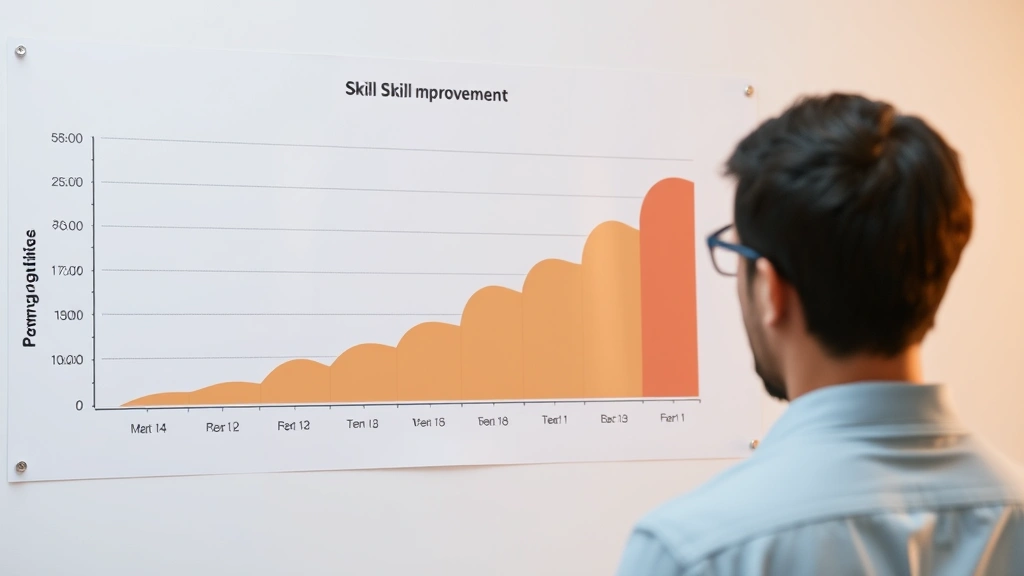
Why Your Brain Actually Needs This Approach
Your brain is lazy. Not in a bad way—it’s actually efficient. Once you’ve mastered something at a basic level, your brain automates it and stops paying close attention. That’s great for riding a bike or typing, but it’s terrible for skill development. Your brain literally stops learning once something becomes automatic.
Deliberate practice works because it keeps your brain in that uncomfortable zone where learning actually happens. Neuroscientist research shows that learning requires myelination—the insulation of neural pathways—which only happens when you’re genuinely struggling with something slightly beyond your current level.
When you practice deliberately, you’re essentially forcing your brain to create new neural connections. Every time you get feedback and adjust, you’re strengthening those pathways. That’s why a focused 30-minute session of deliberate practice often produces more growth than three hours of casual practice.
This connects directly to how you approach skill development overall. You can’t just accumulate experience and expect mastery. You need to be strategic about what you’re practicing and how you’re measuring improvement.
Building Your Deliberate Practice Framework
Okay, so you’re convinced. Deliberate practice works. Now what? Here’s how to actually build a system that works for you.
Step 1: Define Your Target Skill (Specifically)
“I want to get better at public speaking” is too vague. “I want to reduce filler words and improve my pacing when presenting to groups larger than 20 people” is specific. The more precise you can be, the easier it is to design practice that matters.
Step 2: Break It Into Components
Public speaking isn’t one skill—it’s dozens. It’s vocal delivery, body language, content organization, audience reading, handling questions, managing anxiety. Pick one component at a time. Maybe this week you’re focused on vocal variety. Next week, you tackle eye contact patterns.
This approach—breaking complex skills into smaller parts—is fundamental to effective learning strategies. You’re not trying to improve everything simultaneously, which is a recipe for overwhelm.
Step 3: Establish Clear Performance Standards
You need to know what “good” looks like. Not subjectively. Objectively. If you’re learning to code, good means your function passes specific test cases. If you’re learning design, good means your layout follows established design principles and gets positive feedback from actual users. If you’re learning a language, good means you can have a conversation on a specific topic without stopping to think about grammar.
Step 4: Create Feedback Loops
This is where most people fail. You need feedback, and you need it quickly. The longer the delay between your attempt and feedback, the less effective the learning. That’s why working with a coach or mentor is so valuable—they can give you immediate feedback. But you can also create your own feedback loops: record yourself, use apps that track your progress, ask for specific feedback from peers, or measure against objective standards.
Related to this is understanding different coaching techniques that can help you get better feedback and accelerate your growth.
Step 5: Practice at the Edge of Your Ability
This is critical. If the task is too easy, you’re not learning. If it’s too hard, you get frustrated and quit. You want to be operating right at the edge of what you can do—what psychologist Lev Vygotsky called the “zone of proximal development.” It should feel challenging but achievable.
Common Mistakes That Kill Your Progress
Let me save you some time and frustration by highlighting the things that derail most people.
Mistake 1: Confusing Familiarity With Mastery
You’ve read about something or watched tutorials, so it feels familiar. But familiarity is not skill. You haven’t actually done it yet. The only way to develop a skill is through active practice with feedback. There’s no shortcut.
Mistake 2: Practicing in Isolation
Practicing alone can work, but it’s slower and you’re more likely to reinforce bad habits. Getting feedback from others—especially people more skilled than you—accelerates learning dramatically. This is why mentorship and professional development programs with peer interaction are so valuable.
Mistake 3: Not Tracking Progress Objectively
“I feel like I’m getting better” isn’t data. Track something concrete. Time it takes to complete a task. Number of errors. How many reps you can do. How many people engage with your presentation. Something measurable. You’ll be surprised how often your perception of progress doesn’t match reality.
Mistake 4: Quitting Too Soon
Real skill development takes time. The research consistently shows that expertise requires roughly 10,000 hours of deliberate practice. That’s not a myth—it’s a pattern observed across musicians, athletes, and professionals. You’re not going to be great in two weeks. Set realistic timelines and commit to the process.
Mistake 5: Practicing the Same Comfortable Thing
If you only practice what you’re already decent at, you’ll plateau immediately. Deliberate practice means constantly tackling your weaknesses, not your strengths. It’s uncomfortable. It’s supposed to be. That discomfort is where growth happens.
Understanding how to overcome challenges is part of the game. Every skilled person you admire has pushed through this exact discomfort.
How to Actually Measure Your Growth
You can’t improve what you don’t measure. Here’s how to set up a system that actually tells you whether you’re making progress.
Quantitative Metrics
These are numbers. Speed, accuracy, consistency, frequency. If you’re learning to type faster, measure words per minute. If you’re learning to code, measure how many bugs you produce per 1,000 lines of code. If you’re learning to negotiate, measure how often you achieve your target outcome. Pick 2-3 metrics that matter for your specific skill.
Qualitative Feedback
Some things are harder to quantify. Ask people you respect for honest feedback. Record yourself and review it. Reflect on how you feel during practice—are you less anxious? More confident? More aware of what you’re doing wrong? These subjective measures matter too.
Milestone Check-ins
Every 4-6 weeks, step back and evaluate. Are you hitting your targets? Is your feedback telling you what you expected? Do you need to adjust your practice approach? This is where goal setting meets reality. Sometimes your plan needs tweaking.
Long-term Tracking
Keep a simple log. Date, what you practiced, how long, what feedback you got, what you’ll adjust next time. Over months, you’ll see patterns. You’ll notice which types of practice produce the most improvement. That data becomes gold—it tells you what actually works for you.
FAQ
How long does it actually take to get good at something?
It depends on the skill and your starting point, but plan on at least 100-300 hours of deliberate practice to reach basic competence in a complex skill. To get genuinely good—the kind of good where people notice—you’re looking at 1,000+ hours. That sounds like a lot, but spread over a year or two with consistent daily practice, it’s totally doable.
Can you practice too much?
Yes. If you’re not getting quality feedback and you’re just grinding the same thing, you hit diminishing returns fast. Also, your brain needs recovery time. Sleep is where a lot of learning consolidation happens. Aim for focused, high-quality practice sessions rather than marathon grinding.
Does deliberate practice work for creative skills?
Absolutely. A lot of people think creativity can’t be developed systematically, but that’s wrong. Research from the American Psychological Association shows that creative skills develop through deliberate practice just like any other skill. You practice generating ideas, you get feedback, you refine your process. It’s not magic.
What if I don’t have a coach or mentor?
You can absolutely do this alone, but it’s harder. You’ll need to be more disciplined about creating your own feedback loops. Use video recording, apps that measure performance, clear rubrics for what good looks like, and peer feedback. It’s slower than working with a mentor, but it’s still effective.
How do I stay motivated during the hard parts?
Connect your practice to something you actually care about. If you’re learning to code because you want to build something specific, keep that vision front and center. If you’re improving your communication because you want to be a better leader, remind yourself of that regularly. Also, celebrate small wins. Every time you hit a milestone, acknowledge it. These things matter for keeping you in the game long enough to actually get good.