
Learning a new skill feels like standing at the base of a mountain sometimes. You know you want to reach the top, but the path ahead looks steep, winding, and honestly? A bit intimidating. Here’s the thing though—everyone who’s actually good at anything has felt exactly this way. The difference between people who develop real skills and those who give up isn’t talent or some magical gene. It’s usually just understanding how learning actually works and then being willing to show up, even when progress feels glacially slow.
Whether you’re picking up a technical skill, learning to communicate better, or developing leadership abilities, the fundamentals are the same. You need a solid strategy, consistent practice, honest feedback, and the patience to let things click. This guide walks you through exactly how to build real, lasting skill development—not the Instagram version where someone claims they mastered something in 30 days, but the real deal that actually sticks.
Why Most People Plateau in Their Learning
You probably know someone—maybe it’s you—who took a course, felt pumped for two weeks, then… nothing. The enthusiasm evaporates. The practice sessions get shorter. Eventually, they’re back where they started, convinced they’re just not a “learning person.” But that’s rarely the actual problem.
The real issue is usually that people confuse familiarity with mastery. You do something a few times, it stops feeling completely foreign, and your brain says, “Cool, we’re done here.” Except you’re not. You’ve just hit the point where surface-level learning ends and actual skill development begins. This is where most people quit because it starts to feel like work instead of the exciting novelty phase.
Another huge culprit? No clear connection between what you’re learning and why it matters. If you’re grinding away at something but can’t actually see how it applies to your life or work, your brain doesn’t prioritize it. Your brain is practical—it wants to know why it should invest energy into this. When the “why” is fuzzy, motivation dies fast.
There’s also the comparison trap. You’re learning something, scrolling through social media, and suddenly you’re watching someone who’s been at it for years make it look easy. Instead of thinking, “Oh cool, that’s where I’m headed,” you think, “I’m terrible at this.” Comparison is the thief of progress, especially in skill development. Everyone’s on their own timeline.
The Science Behind Skill Acquisition
Let’s talk about what actually happens in your brain when you’re learning something new. There’s solid research here—not just motivational poster stuff, but actual neuroscience. When you practice a skill, you’re not just memorizing facts. You’re literally rewiring neural pathways, strengthening connections between neurons, and building something researchers call procedural memory. This is different from knowing facts. It’s the ability to actually do something.
The process looks something like this: First, you’re in what researchers call the cognitive stage. Everything requires conscious attention. You’re thinking hard about each step. This is exhausting and slow, which is why learning feels so effortful at first. Your working memory is maxed out.
Then comes the associative stage. You’re making fewer errors. Things are starting to feel more automatic. You don’t have to think about every single step anymore. This is where things start getting smoother.
Finally, the autonomous stage. You can do the skill without much conscious effort. Think about how you drive a car now versus when you first learned—you’re not mentally narrating every turn, every gear change. It just happens. That’s automaticity, and it’s the goal.
The catch? Getting from cognitive to autonomous takes a lot of repetition—and not just any repetition. Research from learning science researchers at the American Psychological Association shows that spacing out your practice (learning a bit, then coming back to it later) is way more effective than cramming. Your brain actually needs that recovery time to consolidate what you’ve learned. It’s weird, but it works.
Another game-changer from the research? Interleaving—mixing up what you practice instead of doing the same thing over and over. It feels less smooth in the moment, but it builds deeper, more flexible understanding. It’s like the difference between running the same route every day versus exploring different paths. The second one makes you a better runner overall.
Setting Up Your Learning Environment
You can’t develop skills in a vacuum. Your environment either supports your learning or it works against it. This doesn’t have to mean a fancy setup—it just means being intentional about the conditions you create.
First: minimize distractions. This is non-negotiable. Your phone buzzing, notifications popping up, random browser tabs open—these aren’t minor inconveniences. They’re literally fragmenting your attention and making it way harder for your brain to build those neural pathways we talked about. When you’re practicing, be actually present. Phone in another room. Notifications off. Browser closed except what you need.
Second: create a dedicated space if you can. It doesn’t have to be big. It could be a corner of your desk, a specific chair, anywhere that your brain learns to associate with “this is where I practice this skill.” Your brain loves patterns and associations. When you show up in the same spot repeatedly, it gets into the right headspace faster.
Third: gather your resources before you start. Don’t waste practice time hunting for materials. Have your books, notes, videos, tools—whatever you need—ready to go. This keeps your momentum and your focus intact.
Fourth, and this matters more than people realize: make sure you’re rested. You can’t develop skills effectively when you’re running on fumes. Your brain needs sleep to consolidate learning. You need energy to focus. If you’re trying to practice when you’re exhausted or stressed out, you’re working against yourself. Schedule your practice during times when you’re actually alert.
The Deliberate Practice Framework
Not all practice is created equal. You’ve probably heard the “10,000 hours” thing. Here’s the truth: it’s not about the hours. It’s about the quality of those hours. Deliberate practice is the framework that actually builds skill.
Deliberate practice has specific characteristics. First, it’s focused on improving specific aspects of your performance, not just repeating what you’re already good at. If you play guitar and you’re great at strumming, spending an hour strumming isn’t deliberate practice. Working on that technique you struggle with? That’s deliberate practice.
Second, it involves immediate feedback. You try something, you see whether it worked, and you adjust. This feedback loop is crucial. Without it, you’re just repeating the same mistakes over and over, cementing bad habits. This is why having a coach, mentor, or even a practice partner matters so much—they provide that outside perspective on what’s actually working.
Third, it’s uncomfortable. If your practice sessions feel easy and fun the whole time, you’re probably not pushing yourself hard enough. Growth happens at the edge of your current ability. You want to be challenged, making mistakes, then figuring out how to do better. That’s where the real development happens.
Fourth, it requires clear goals. Not vague stuff like “get better at public speaking.” Specific: “deliver a presentation where I maintain eye contact with the audience for at least 70% of the time and speak without filler words for entire 5-minute sections.” Concrete goals let you know exactly what you’re working toward and whether you’re actually making progress.
The framework looks like this: Set a specific goal → Practice with full focus → Get feedback → Adjust your approach → Repeat. And repeat. And repeat some more. This is where professional development organizations emphasize the importance of structured practice.
Here’s a practical example: You’re developing communication skills. Instead of just “practicing communication,” you might focus on one specific skill: asking clarifying questions in conversations. You practice this in actual conversations (or recorded role-plays), you get feedback from someone on how well you’re doing it, and you specifically work on improving that one skill until it becomes natural. Then you move to the next skill.
Tracking Progress Without Obsessing
Progress in skill development isn’t always linear. Sometimes you’ll feel like you’re moving forward. Other times, you’ll feel stuck. Both of these feelings are normal and don’t necessarily reflect reality. This is why tracking matters—it gives you objective data beyond how you feel on any given day.
But tracking can also become obsessive and counterproductive. You don’t need to measure everything. You need to measure the things that actually matter for your skill. For a writing skill, that might be: words written per session, number of drafts completed, or feedback scores on specific elements (clarity, structure, tone). For a technical skill, it might be: problems solved correctly, time to completion, or error rate.
The key is to track things that are meaningful and actionable. If you’re tracking something and it doesn’t tell you anything useful about your progress or point to what to improve next, drop it. It’s just noise.
Keep it simple. A spreadsheet. A journal. An app. Whatever you’ll actually use. Check in on your progress weekly or monthly—not daily. Daily tracking can make you crazy because the changes are tiny. Weekly or monthly gives you enough data to spot real trends.
And here’s the important part: celebrate actual progress. Not in a fake way. Genuinely recognize when you’re getting better. When you hit a milestone, acknowledge it. Your brain responds to recognition and reward—it reinforces the behavior and keeps you motivated.
Staying Consistent When Motivation Fades
Real talk: motivation is unreliable. You’ll start with tons of it. Then it will fade. This is completely normal and doesn’t mean you’re failing. It means you’re human. The people who actually develop skills aren’t the ones with endless motivation—they’re the ones who’ve built systems that work even when motivation is low.
This is where habits come in. Instead of relying on feeling like practicing, you build a routine. You practice at the same time every day or every week. It becomes part of your life, like brushing your teeth. You don’t think about whether you feel like brushing your teeth—you just do it.
Start with a time commitment you can actually sustain. Seriously. Thirty minutes, three times a week is infinitely better than “I’ll do two hours whenever I feel like it.” Consistency beats intensity. Small, regular practice compounds over time in ways that sporadic intense sessions never do.
Connect your practice to something you actually care about. This is where the “why” comes back in. Why does developing this skill matter to you? How will it change your work, your relationships, your opportunities? The stronger that connection, the easier it is to keep going when motivation is low.
Find an accountability partner if you can. Someone who’ll check in on your progress, call you out when you’re slacking, and celebrate with you when you hit milestones. It doesn’t have to be formal. Could be a friend, a colleague, someone in an online community. Just knowing someone else is paying attention makes a huge difference.
And be willing to adjust. If your current practice routine isn’t working, change it. If you’re bored, mix it up. If it’s too hard, scale back. The point isn’t to stick with a system that’s not serving you—it’s to stick with the practice itself, even if the format changes.
Getting and Using Feedback Effectively
Feedback is probably the most underrated element of skill development. You can practice all day, but without feedback, you’re just reinforcing whatever you’re already doing—whether it’s right or wrong.
There are different types of feedback, and they serve different purposes. Immediate feedback is when you try something and instantly know if it worked. Throwing a dart—you see where it lands. Immediate feedback is powerful because the connection between action and result is clear.
Some skills don’t have immediate feedback built in. That’s where you need to seek it out. Ask someone to watch you and give you honest input. Record yourself and review it. Use practice software that grades your performance. The key is getting specific, actionable feedback, not vague stuff like “good job” or “you’re not very good at this.”
Good feedback tells you exactly what you did and what the impact was. “When you paused before answering that question, you gave yourself time to think and your response was much clearer” is useful. “You did okay” is not.
Research from peer-reviewed studies on feedback in skill acquisition shows that feedback is most effective when it’s timely (soon after you perform), specific (about the behavior, not the person), and actionable (you can actually do something with it).
Here’s something else: be willing to hear hard feedback. The feedback that stings a little? That’s often the most valuable because it’s pointing out something you might not want to admit but need to know. It’s not personal—it’s data. Use it.
And reciprocally, if you’re giving feedback to someone else, follow the same rules. Be specific. Be kind but honest. Focus on the behavior and the impact. Help them actually improve, not just feel bad about themselves.
One more thing: feedback is a conversation, not a verdict. After you get feedback, ask clarifying questions. Understand the specifics. Work with the person to figure out what you’re going to do with that information. The best feedback loops are collaborative.
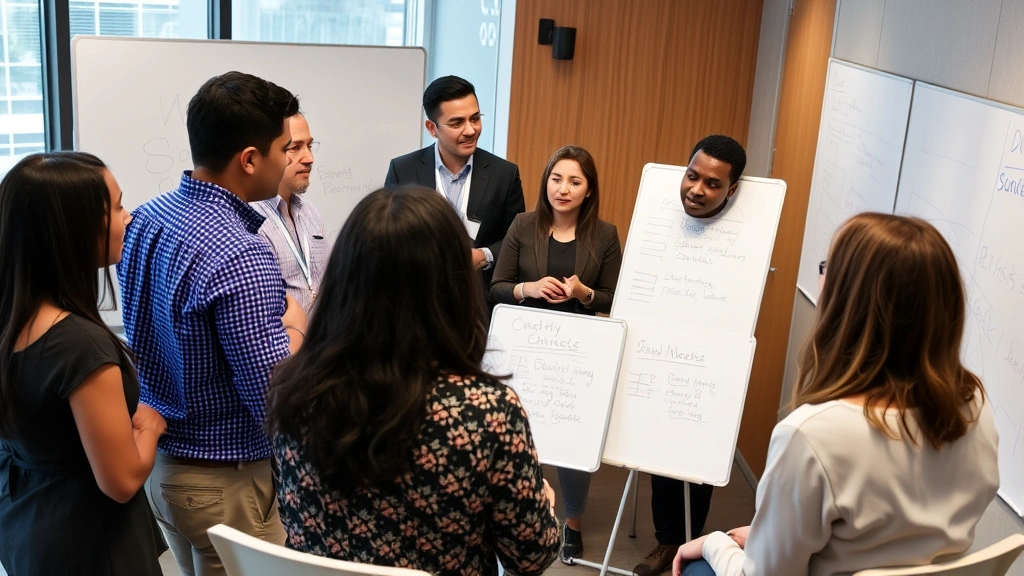
As you’re building these feedback loops and practicing deliberately, remember that skill development is a process, not a destination. You’re not trying to reach some perfect endpoint where you’re done learning. You’re trying to continuously get better at something you care about. That mindset shift—from “I need to master this” to “I’m committed to getting better at this”—takes a lot of pressure off and actually makes the learning more enjoyable.
One more practical consideration: professional development resources and communities can accelerate your learning. Being around other people who are developing similar skills, learning from their experiences, seeing what’s working for them—it’s genuinely valuable. Whether that’s online communities, local groups, or formal programs, find your people.

The honest truth is that developing real skill takes time. Weeks. Months. Sometimes years, depending on what you’re learning and how deep you want to go. But here’s what’s also true: if you start today and practice consistently, you’ll be shockingly better in six months. Not perfect. Not an expert. But genuinely noticeably better. And then you keep going from there.
FAQ
How long does it actually take to develop a new skill?
It depends on the skill and your definition of “developed.” You can get decent at most skills in 3-6 months with consistent practice. Getting genuinely good takes longer—usually 1-2 years. Getting excellent takes even longer. But the important thing is that you’ll see real progress way faster than you think if you’re practicing deliberately.
What if I don’t have much time to practice?
Start with what you have. Thirty minutes, three times a week is fine. The consistency matters way more than the duration. You’d rather practice 30 minutes regularly than have irregular long sessions. Your brain consolidates learning over time—short, frequent practice is actually better than long, sporadic sessions.
How do I know if I’m actually improving?
Look at your tracking data, not just how you feel. Compare where you were a month ago to where you are now. Get feedback from someone else. Record yourself and review the progress. Your feelings are unreliable—they’re influenced by mood, fatigue, and comparison. Data is more honest.
Is it too late to develop new skills?
No. Your brain’s ability to learn doesn’t have an expiration date. It might take a bit longer as you get older, and you might approach it differently, but you can absolutely develop new skills at any age. Research on adult learning is pretty clear on this.
What’s the difference between practice and deliberate practice?
Regular practice is just doing something repeatedly. Deliberate practice is focused, intentional work on specific aspects of your performance with feedback and adjustment. You could play guitar for 10,000 hours without improving much if you’re just playing songs you already know. Deliberate practice means working on the hard parts, getting feedback on what’s not working, and adjusting your approach.
How do I stay motivated when progress is slow?
Focus on process, not just outcomes. Celebrate that you showed up and practiced, not just whether you hit a specific goal. Connect your practice to your bigger “why.” Find a community or accountability partner. Track small wins. And be honest with yourself—if the skill doesn’t actually matter to you, that’s okay. You can stop and pursue something that does. Not every skill is worth your time.